How to transition a city to smart LED street lighting? The answer begins with streets, not software. City leaders must understand existing poles, wiring, maintenance habits, and neighborhood needs. A night survey can reveal dark crossings, uneven illumination, and lamps wasting energy above empty roads. These details shape a practical transition plan.
Boyd Cohen, a recognized smart-city strategist, has said, “Smart cities are not about technology; they are about people.” That principle matters here. Smart lighting should improve safety, reduce energy use, and support reliable public services. It should not become an expensive technology display. A city can begin with a carefully selected pilot district. Install efficient LED fixtures, adaptive dimming, remote monitoring, and open communication standards. Measure electricity savings, fault-response time, light quality, and resident feedback. Compare winter and summer performance.
The work also requires trained technicians, transparent procurement, and strong cybersecurity controls. Privacy deserves attention when sensors are added near homes, schools, or transit stops. Not every connected feature creates public value. Some may increase maintenance demands. That is an uncomfortable possibility. Cities should review the pilot honestly before expanding it.
A successful transition is gradual. Existing poles may need replacement. Utility records may contain errors. Residents may dislike darker streets, even when standards are met. Therefore, engineers and officials should explain lighting changes clearly and publish performance results. The strongest program combines field experience, measurable evidence, accessible design, and long-term funding. Smart LED lighting is not a single purchase. It is a managed public infrastructure upgrade.
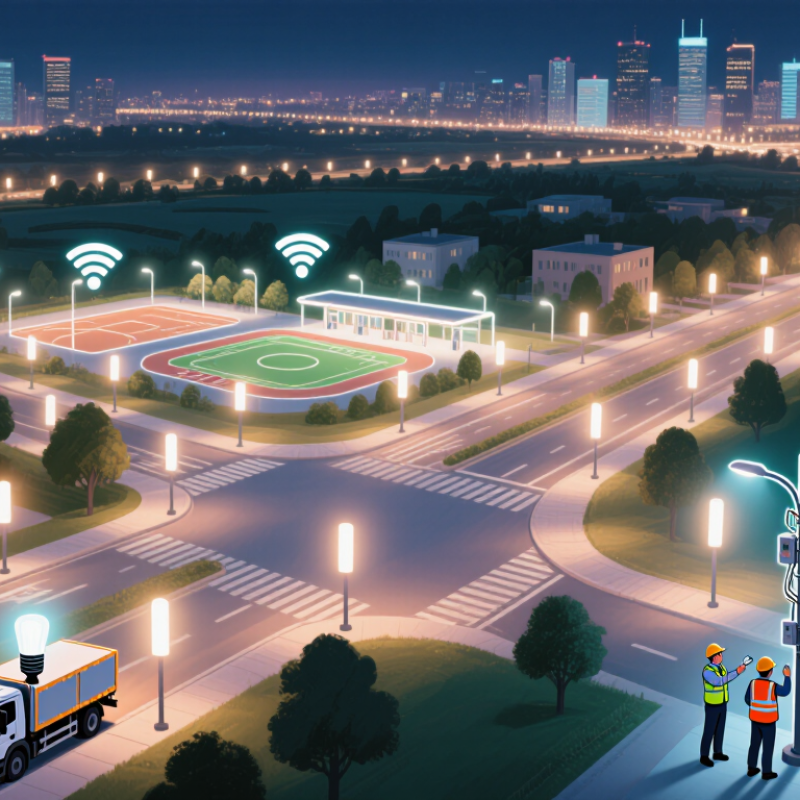
Transitioning to smart LED street lighting is more than replacing old lamps. It changes how cities manage light, energy, maintenance, and public safety.
The shift begins with a detailed assessment of existing streets. Municipal teams should map pole locations, cable conditions, lighting levels, and maintenance records. Look for corrosion. A careful survey prevents expensive surprises later. LED fixtures can reduce energy use, but savings depend on correct wattage, optics, and operating schedules. Poorly aimed light may create glare instead of better visibility.
Smart lighting adds connected controllers, sensors, and remote monitoring. Use open communication protocols where possible. This helps cities avoid difficult system changes later. Set clear rules for data access and cybersecurity. Test dimming schedules during quiet hours, then review pedestrian and traffic conditions. Field technicians often discover problems that planning documents miss. That detail matters.
A small pilot can reveal practical weaknesses before a city-wide rollout. Compare energy readings, outage response times, and maintenance visits. Record changes after rain, heat, and winter storms. Do not trust projected savings alone. Weather, traffic patterns, and human behavior can affect results. One uncomfortable lesson is that not every sensor performs reliably in every location. Some streets need brighter lighting, while others need better shielding. The transition is rarely elegant, but measured adjustments can make the system safer, more useful, and easier to maintain.
A smart street lighting project should begin with evidence, not attractive product promises. Walk every lighting route at night and record dark spots, glare, pole damage, and uneven brightness. During daylight, inspect poles, feeder cables, junction boxes, grounding, and control cabinets. Rust near the base deserves attention.
Collect maintenance logs and electricity bills from at least three years. Compare them with actual operating hours. Old drawings may be incomplete. They often are. Confirm cable routes and circuit ownership before preparing a final design. Check whether existing poles can support new equipment, sensors, or communication units. A structural engineer should review uncertain poles.
Define goals that can be measured. These may include lower energy use, faster fault response, improved pedestrian visibility, or reduced maintenance visits. Avoid vague targets such as “better lighting.” Specify acceptable illumination levels, dimming schedules, response times, and annual savings. Local road classifications and safety rules must guide these decisions.
Use a pilot area with mixed conditions, such as a residential street, a busy junction, and a poorly maintained road. Measure light levels before and after installation. Record complaints, outage times, and network reliability. A pilot can expose weak assumptions. That is useful. Project teams should also compare capital costs, software fees, training needs, replacement parts, and long-term energy savings before approving wider deployment.
Selecting the right LED fixture is more than comparing wattage. Examine roadway classification, mounting height, beam distribution, glare control, color temperature, and expected nighttime activity. A well-designed fixture should provide uniform illumination without bright patches near intersections. Check ingress protection, surge protection, thermal performance, and maintenance access. In field projects, small housing details matter. Dusty roads and coastal air can shorten service life.
Controls must match the city’s operating habits. Use scheduled dimming for predictable traffic, but preserve safe light levels near crossings and bus stops. Add motion or traffic-based control only after testing sensor accuracy. Network technology also deserves careful planning. Mesh networks can suit dense neighborhoods, while cellular or long-range radio may work better across scattered roads. Confirm signal strength from the highest pole, not from street level. Interoperability and cybersecurity documentation should be required before installation.
Tips: Begin with a small pilot corridor. Measure energy use, outage response, glare complaints, and communication reliability for several weeks. Our first pilot was too bright at midnight, despite meeting the basic design target. That result exposed a weakness in our assumptions. Keep independent photometric records, train maintenance teams, and define who owns the network data. Avoid choosing advanced features that field technicians cannot configure or repair. Reliable simplicity often performs better.
Transitioning to smart LED street lighting starts with planning, not lamp replacement. The U.S. Department of Energy’s Municipal Solid-State Street Lighting Consortium reports that LED conversions can reduce street-lighting energy use by roughly 50–70%, depending on existing equipment and controls. A reliable plan maps each pole, feeder, mounting height, wattage, outage history, and nighttime activity. Measure before choosing fixtures. A bright road is not always a safer road.
Installation should begin with a small pilot across residential streets, junctions, and poorly lit areas. Record lux levels, glare complaints, maintenance time, and network reliability. The first inventory is rarely perfect. Missing poles or incorrect cabinet data can disrupt procurement and commissioning. Use open communication protocols where possible, and test dimming schedules locally before wider deployment. The International Energy Agency identifies lighting as about 15% of global electricity consumption, so control settings can influence both savings and public comfort.
Integration requires more than connecting sensors to a dashboard. Traffic, outage, asset, and maintenance systems should exchange consistent location and status data. NIST’s Cybersecurity Framework supports risk identification, protection, detection, response, and recovery for connected infrastructure. Store only necessary data, define access roles, and document retention periods. A practical data model should show pole ID, GPS position, firmware version, energy use, fault time, and repair history. Do not assume every sensor is accurate. Monthly validation remains necessary.
Transitioning to smart LED street lighting should begin with measurable field conditions, not attractive dashboards. Survey crews can record nighttime lux levels, outage frequency, pole spacing, and energy use across representative roads. Install temporary meters where possible. Compare readings before and after each upgrade. A central platform may show lower consumption, but residents may still report dark crossings. That gap matters. Track lighting uniformity, glare complaints, response times, and network availability for at least twelve months. Short tests can hide seasonal failures.
Maintenance data reveals whether the system earns its promise. Keep a digital log for every pole, including driver replacements, dimming faults, water ingress, and inspection dates. Set practical service thresholds, such as repairing critical outages within a defined number of hours. Review failure clusters after storms and voltage changes. Technicians should verify remote alarms on site; not every alert identifies the real fault. Experience prevents expensive assumptions. A failed communication node can look like several failed lamps.
Long-term benefits should include energy savings, safer maintenance, reduced truck visits, and predictable budgeting. Calculate total ownership cost, including software, sensors, training, spare parts, and disposal. Use verified utility bills instead of estimated savings. Reassess controls when traffic patterns change. Some dimming plans may save energy but reduce confidence near schools or bus stops. The uncomfortable truth is that not every corridor needs identical settings. Document exceptions, publish performance reports, and invite independent review. Trust grows through visible evidence, not perfect claims.
Measuring performance, maintenance, and long-term benefits
The chart uses a conventional high-pressure sodium street-lighting system as the baseline index of 100. A typical smart LED retrofit can reduce lighting energy consumption and carbon emissions by approximately 40–60%, reduce maintenance events by around 45%, and extend useful service life from about 20,000 hours to approximately 100,000 hours. Actual results depend on roadway design, operating schedules, controls, and local maintenance practices.
Indicative benchmark values based on commonly reported municipal LED retrofit performance ranges; values are not company-specific.
Survey pole locations, cable conditions, light levels, corrosion, and maintenance records. Old infrastructure may hide expensive problems. A careful survey reduces surprises.
Correct wattage, beam direction, and operating schedules are essential. Poorly aimed light can create glare instead of improving visibility. Lower consumption is not guaranteed.
Connected controllers, sensors, and remote monitoring support automated management. Open communication protocols can reduce future system limitations. Keep the system understandable.
Begin with a small pilot corridor for several weeks. Test dimming during quiet hours, then review pedestrian and traffic conditions. Check crossings and bus stops carefully.
Mesh networks may suit dense neighborhoods. Cellular or long-range radio may work better across scattered roads. Confirm signal strength from the highest pole, not street level.
Measure energy use, outage response, glare complaints, and communication reliability. Record performance after rain, heat, and winter storms. Projected savings can mislead.
Track lighting uniformity, outage frequency, network availability, and maintenance response times. Use verified utility bills instead of estimates. Short tests hide seasonal failures.
Keep digital records of driver replacements, dimming faults, water ingress, and inspection dates. Technicians should verify remote alarms on site. One alert may represent several issues.
No. Traffic, nearby schools, crossings, and nighttime activity can differ greatly. Some corridors need brighter light, while others need better shielding. Our assumptions may be wrong.
Include software, sensors, training, spare parts, disposal, and network ownership. Also consider safer maintenance, fewer truck visits, and predictable budgeting. Simple systems may perform better.
Transitioning from conventional streetlights to smart LED systems can improve energy efficiency, public safety, maintenance, and urban services when the process is carefully planned. The first step is to assess existing poles, wiring, power supplies, lighting levels, and maintenance records while defining clear goals such as reducing energy use, improving coverage, lowering operating costs, or supporting future city services. Asking “How to transition a city to smart LED street lighting?” requires a practical roadmap that connects technical upgrades with long-term urban needs.
Cities should then select efficient LED fixtures, compatible sensors, adaptive controls, communication networks, and management software based on local conditions and project budgets. Installation should be organized in phases to reduce disruption and ensure reliable integration with existing systems. Accurate asset records, cybersecurity practices, and responsible data management are also essential. After deployment, cities should measure energy savings, lighting performance, fault response times, maintenance costs, and community benefits. Regular evaluation and preventive maintenance will help maximize system reliability and long-term value.

Jamaica Light