High-power LED floodlights promise strong illumination, low energy use, and long service life. Yet performance depends on more than diode efficiency. The real question is: Why is heat dissipation critical for high-power LED floodlights?
The U.S. Department of Energy’s Solid-State Lighting reports identify thermal management as a major factor in LED performance and reliability. Heat raises junction temperature, reduces light output, and accelerates component aging. In a poorly designed floodlight, the rear housing may feel hot after only thirty minutes. That heat can weaken phosphors, solder joints, drivers, and protective seals.
Small details matter. A thick aluminum heat sink spreads energy more effectively than a thin steel plate. Open fins need airflow, while sealed outdoor housings require careful thermal paths. Industry testing standards also clarify the issue. IES LM-80 measures LED package lumen maintenance, while TM-21 projects long-term performance. Neither standard excuses weak fixture design. The LED may pass testing, yet the complete floodlight can still fail under dust, humidity, or summer heat.
The U.S. Department of Energy has also reported that LED efficacy and lifetime claims depend strongly on operating temperature and system conditions. This is why experienced manufacturers test complete fixtures, not only individual chips. China’s leading LED suppliers increasingly use thermal simulation, die-cast aluminum bodies, and surge-protected drivers. However, marketing figures can still look better than field results. That assumption deserves scrutiny. Buyers should request LM-80 data, TM-21 projections, thermal test records, and lumen maintenance evidence. A bright floodlight is useful. A cool, stable, well-documented floodlight is far more dependable.
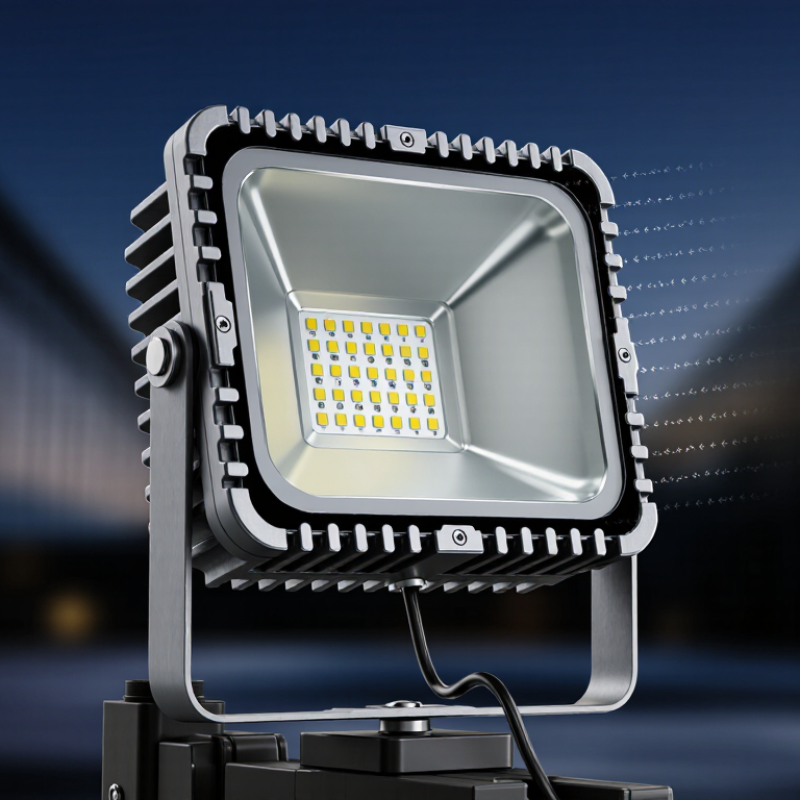
China’s LED floodlights differ through more than output numbers. Their designs often reflect fast manufacturing feedback and varied project requirements. In practical inspections, I look beyond brightness. I check the housing, driver layout, thermal path, and mounting position.
Heat dissipation remains a decisive factor. A high-power LED produces intense heat inside a compact enclosure. Many Chinese floodlights use finned aluminum bodies to move heat away from the LED board. Some models also separate the driver from the hottest area. This can reduce stress on components during long nighttime operation. Thermal paste quality matters too. A poor interface can leave invisible hot spots, even when the exterior feels cool.
The supply chain also creates flexibility. Manufacturers can adjust beam angles, cable lengths, wattage, and housing sizes for different installations. That flexibility is useful for warehouses, sports areas, roads, and construction sites. However, customization does not guarantee reliability. A sample may perform well in a short test, then weaken after months of dust, vibration, or repeated temperature changes.
I have seen impressive brightness hide weak connectors and undersized drivers. That experience changed my inspection habits. I now request thermal testing, ingress protection evidence, photometric data, and clear operating limits. Independent verification is still necessary. Specifications can look perfect on paper. Real performance depends on materials, assembly, installation, and maintenance.
Heat starts immediately inside an LED floodlight. Electrical current crosses the LED junction, producing light and heat at the same time. The junction is tiny. Heat density becomes significant.
The U.S. Department of Energy’s Solid-State Lighting R&D Opportunities report identifies thermal management as a major challenge for LED reliability and efficiency. In practice, roughly 60–80% of input electrical power may become heat, depending on LED efficacy and driver losses. That heat travels through the package, solder layer, circuit board, thermal interface, and metal housing. Each layer adds thermal resistance.
If the heat path is weak, junction temperature rises quickly. A 20°C increase can noticeably accelerate lumen depreciation and component aging. IES LM-80 testing commonly evaluates LED packages at 55°C and 85°C, while TM-21 projects lumen maintenance from measured data. These figures are laboratory references, not guarantees for a dusty outdoor fixture.
A hot housing is not automatically defective. It may be removing heat effectively. However, blocked fins, thick paint, poor mounting contact, or an undersized thermal pad can trap heat near the LEDs. Field checks should measure case temperature after several hours, not after five minutes. Our first assumption can be wrong. Airflow, installation angle, ambient temperature, and driver placement often change the result.
China Best LED Floodlights: Why Heat Dissipation Matters?
LED floodlights convert most electrical energy into light, but some energy becomes heat. That heat gathers around the LED chip and driver. If it cannot escape, junction temperature rises quickly. Light output may decline. Color can shift, and internal components may age faster. In outdoor projects, this problem becomes worse under direct summer sunlight.
A reliable floodlight needs a well-designed heat path. Heat should move from the LED board into the housing, then into surrounding air. Aluminum housings, deep fins, and firm thermal contact can improve this process. Dust, blocked vents, and poor installation may reduce cooling performance. Leave space around the fixture. Do not bury it beneath insulation or thick decorative covers.
Temperature testing should reflect real conditions, not only a cool indoor room. Measure the housing after several hours at full power. Check ambient temperature, mounting direction, and airflow. A cooler surface does not always prove excellent internal cooling. The thermal interface may still be uneven. This is where product evaluation can become imperfect. Engineers should record repeated readings and question unusual results. Stable heat control supports brighter, more consistent lighting and reduces maintenance pressure over time.
| Performance Dimension | Typical Value or Range | Why It Matters | Effect of Effective Heat Dissipation |
|---|---|---|---|
| Rated Power | 30–300 W for common outdoor floodlights | Determines electrical consumption and the amount of heat generated during operation. | Supports stable operation by preventing excessive heat accumulation inside the housing. |
| LED Junction Temperature | Best kept as low as practical; many designs target below approximately 100°C under rated conditions | Higher junction temperatures accelerate lumen depreciation and can shorten LED service life. | Reduces thermal stress on LED chips, phosphors, and solder connections. |
| Ambient Operating Temperature | Common outdoor design range: −20°C to 50°C | Outdoor luminaires must maintain performance across seasonal temperature changes. | Helps maintain output and reliability when ambient temperatures are high. |
| Heat-Sink Material | Die-cast or extruded aluminum is widely used | Aluminum combines relatively high thermal conductivity with low weight and corrosion-resistant finishing options. | Transfers heat efficiently from the LED board to the surrounding air. |
| Thermal Interface Material | Thermal paste, pad, or phase-change material between the LED board and heat sink | Air gaps between mating surfaces increase thermal resistance. | Improves contact and reduces heat-transfer resistance when correctly applied. |
| Heat-Sink Surface Design | Finned or ribbed surfaces with clear airflow paths | Greater effective surface area allows heat to dissipate through natural convection. | Improves cooling without requiring moving parts or additional power. |
| Ingress Protection | IP65 is commonly used; higher protection may be selected for harsher environments | Protection against dust and water helps preserve internal electrical and optical components. | Requires a balanced design because sealed housings can restrict airflow and retain heat. |
| Luminous Efficacy | Approximately 100–180 lm/W, depending on system design and operating conditions | Indicates how efficiently electrical power is converted into visible light. | Lower operating temperature helps reduce thermal-related output losses. |
| Initial Lumen Output | Approximately 3,000–45,000 lm for 30–300 W systems | Determines the illuminated area and the required mounting height and spacing. | Helps the fixture maintain more consistent light output during long operating periods. |
| Lumen Maintenance | Often specified as L70, the time until output reaches 70% of initial lumens | Provides a practical measure of long-term LED light-output retention. | Lower temperatures generally support longer lumen-maintenance performance. |
| Driver Operating Temperature | Must remain within the driver manufacturer's specified temperature limits | The driver converts incoming power and can be affected by excessive heat. | A cooler enclosure can reduce capacitor aging and improve electrical reliability. |
| Expected Service Life | Commonly rated at 50,000 hours under defined test conditions | Actual life depends on temperature, operating hours, power quality, and environmental exposure. | Effective thermal management increases the likelihood of achieving the rated service life. |
| Thermal Warning Sign | Visible dimming, intermittent operation, discoloration, or unusually hot housing | These symptoms may indicate insufficient cooling, driver stress, or installation problems. | Requires inspection of mounting, airflow, ambient temperature, and electrical loading. |
| Recommended Installation Practice | Mount on a solid surface with unobstructed heat-sink fins and adequate clearance | Incorrect mounting can block convection and transfer additional heat to the fixture. | Maintains designed airflow and helps the luminaire operate within its thermal limits. |
Note: Values are typical engineering ranges for outdoor LED floodlights. Actual performance depends on the complete luminaire design, components, installation conditions, and verification method.
Heat management strongly influences LED brightness, lifespan, and electrical safety. In field inspections, overheated housings often show darkened lenses or softened wiring. The first cooling method is passive heat sinking. A thick aluminum body absorbs heat from the LED board and releases it through external fins. More surface area usually improves cooling. However, oversized fins can add weight and collect dust.
Airflow is another practical method. Vented housings allow warm air to escape while cooler air enters. This design works well in open outdoor areas. It performs poorly in dusty or wet locations. Sealed floodlights usually depend on conduction cooling instead. Heat travels through the circuit board, thermal compound, and housing wall. The thermal compound must cover the contact area evenly. Small gaps can create hot spots.
Some high-power fixtures use active cooling, including fans or internal blowers. These systems can reduce temperatures quickly, but moving parts may require maintenance. Moisture, dirt, and vibration can shorten fan life. During testing, installers should measure the housing temperature after several hours, not only during startup. A surface above 70°C may indicate insufficient heat transfer, though the safe limit depends on the design. No cooling method is perfect. Even good designs may underperform when mounted against a wall, covered with paint, or installed without airflow. A little more testing would prevent many avoidable failures.
A bright LED floodlight can still fail early when heat has nowhere to go. Heat tells the truth. During sourcing, inspect the housing, not only the advertised wattage. Look for thick aluminum, deep cooling fins, and a flat mounting surface. These details help move heat away from the LED board and driver.
Ask the supplier for thermal test data at the intended ambient temperature. A reliable report should show LED junction temperature, housing temperature, and test duration. Request photographs of internal wiring and thermal pads.
Loose pads, uneven contact, or crowded components can create hot spots. I once trusted a low-cost sample because its light output looked impressive. After several hours, the rear housing became too hot to touch. My first inspection was too shallow.
Check whether the driver is separated from the hottest LED area. Confirm the floodlight’s IP rating, cable quality, surge protection, and operating temperature range. Ask for independent photometric and electrical safety reports, not edited screenshots.
Test a sample outdoors for several nights, especially during warm weather. Measure brightness before and after continuous operation. A small brightness drop may reveal thermal stress.
Do not ignore installation details, either. Dust, blocked fins, and a tilted bracket can reduce cooling. Supplier claims are useful, but physical testing remains more convincing.
Differences involve housing design, driver placement, beam angle, and mounting options. Brightness alone is not enough. Materials matter.
LEDs convert much electrical energy into heat. Poor heat removal can reduce brightness and shorten component life. A cool-looking exterior may hide internal hot spots.
A finned aluminum body draws heat from the LED board. External fins release that heat into surrounding air. Dust can reduce their effectiveness.
Not necessarily. A warm housing may be removing heat successfully. Measure its temperature after several hours, not five minutes.
Passive cooling uses metal housings and external fins. Vented designs use airflow. Active systems may use fans, but fans need cleaning and maintenance.
Yes. A wall-mounted fixture may lose airflow and retain heat. Thick paint, blocked fins, or a poor mounting surface can worsen cooling.
Request thermal test results, ingress protection evidence, photometric data, and operating limits. Inspect connectors, wiring, and driver size. Paper specifications can still disappoint.
Test it for several hours under realistic conditions. Include dust, vibration, temperature changes, and the intended mounting angle. Short tests can mislead us.
No. Wattage, cable length, beam angle, and housing size can be adjusted. Reliability still depends on assembly, materials, installation, and maintenance. I sometimes trust samples too quickly.
China’s LED floodlights stand out through flexible manufacturing, varied configurations, and a strong focus on practical performance for different applications. However, their reliability depends heavily on how effectively heat is managed. Inside a high-power LED floodlight, electrical energy is converted into light and heat, while drivers and other components also generate thermal energy. If this heat remains trapped, the LED junction temperature rises, which can reduce brightness, shift color quality, shorten component life, and increase the risk of failure. Why is heat dissipation critical for high-power LED floodlights? It protects performance, stability, and long-term value.
Common cooling solutions include aluminum housings, heat sinks, thermal interface materials, ventilation structures, and carefully designed internal layouts. When choosing a well-cooled LED floodlight from China, buyers should examine the housing material, heat sink size, thermal design, driver quality, sealing level, and test information. A reliable product should combine efficient cooling with suitable power, consistent light output, durable construction, and performance appropriate for its installation environment.

Jamaica Light