Industrial lighting must remain dependable where dust, moisture, vibration, and accidental impacts are common. Warehouses, workshops, parking areas, food-processing rooms, and agricultural buildings often create these conditions. A standard indoor fixture may discolor, collect condensation, or fail when exposed to them repeatedly. Tri-proof lighting is designed for more demanding environments, using sealed housings, protected electrical components, and durable LED systems.
A practical question guides this topic: What does "Tri-proof" actually mean in industrial lighting? Traditionally, the term refers to resistance against water, dust, and corrosion. However, manufacturers may interpret it differently. Some products emphasize IP65 or IP66 protection, while others add impact resistance, such as an IK rating. These ratings matter more than the label itself. They provide measurable information about enclosure performance and installation limits.
Look closely at the details.
A reliable evaluation should consider the fixture’s housing material, lens strength, seals, wiring method, operating temperature, and maintenance access. For example, a sealed linear light above a loading bay should tolerate airborne dust and occasional water spray. It should also produce stable illumination without creating excessive glare for workers. In practice, performance depends on correct installation, suitable mounting hardware, and regular inspection. Even a well-engineered fixture can fail if its cable entry is poorly sealed. That point is easy to overlook.
This guide explains how tri-proof construction works, where these lights are commonly used, and which specifications deserve careful attention. It also questions common marketing claims, because “tri-proof” alone does not guarantee long service life. Reliable decisions require evidence, not attractive packaging.
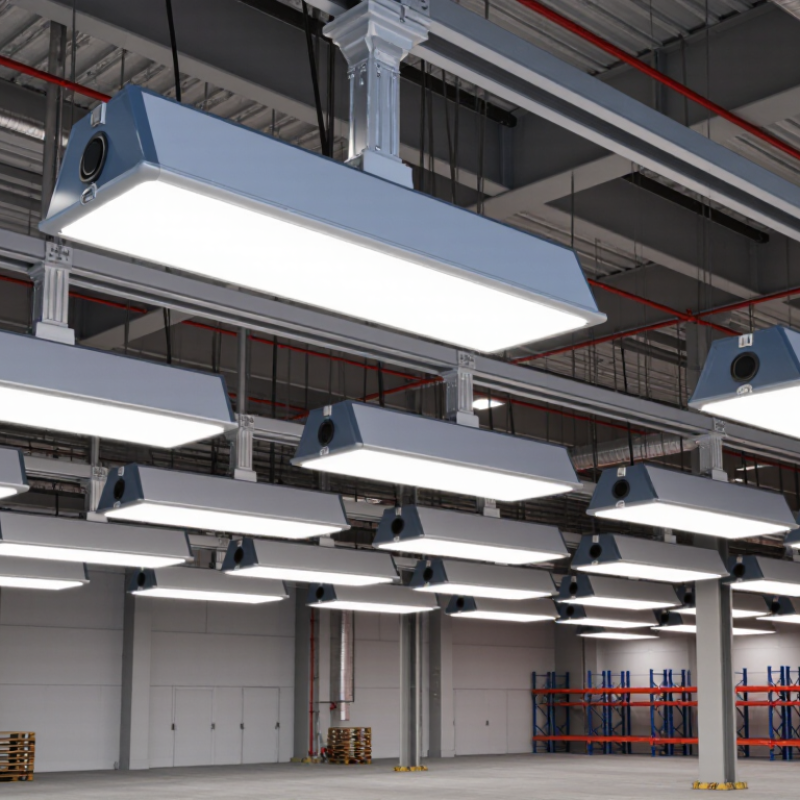
Definition and Core Features of Tri-Proof Lighting
What Is Tri-Proof Lighting and Why Is It Used?
Definition and Core Features of Tri-Proof Lighting
Tri-proof lighting describes sealed luminaires built for dust, moisture, and corrosive conditions. The term is widely used in industrial lighting, but it is not a single universal standard. Actual protection depends on the product’s tested ratings and construction.
A typical tri-proof fixture uses a sealed housing, flexible gaskets, and a diffused lens. Its enclosure may carry an IP65 or IP66 rating under IEC 60529 testing. IP65 resists dust ingress and water jets. IP66 offers stronger protection against powerful water jets. Some models also use stainless clips or corrosion-resistant coatings for washdown areas, parking structures, tunnels, and cold rooms.
The “three-proof” label can be misleading. Some products resist dust and water well but perform poorly against chemicals or heat. This is why site conditions matter more than marketing language. Check the IP rating, ambient temperature range, impact rating, and material compatibility before installation. A facility engineer should also inspect seals after repeated cleaning cycles.
Energy use is another practical reason for adoption. The International Energy Agency reports that lighting consumes about 15% of global electricity. Efficient LED systems can reduce operating demand, especially where fixtures run for long shifts. However, efficiency claims need careful checking. Poor thermal design, dirty lenses, and unsuitable controls can reduce real-world savings.
Personally, I would treat laboratory figures as a starting point, not a guarantee.
How Tri-Proof Fixtures Are Designed to Resist Harsh Conditions
Tri-proof lighting is engineered for dust, moisture, vibration, and temperature changes. The term usually describes protection against water, dust, and corrosion. However, it is not a universal certification. Buyers should check the actual IP and IK ratings.
A sealed housing is central to the design. Polycarbonate or treated aluminum bodies reduce cracking and rust. Silicone gaskets close the lens and end caps tightly. IP65 protection limits dust entry and resists water jets, while IP66 offers stronger water-jet protection under IEC 60529.
For impact-prone areas, an IK08 rating can help protect the diffuser from accidental blows. Small details matter. A weak cable gland can defeat a strong enclosure.
Heat management is equally important. Efficient LED boards produce less heat than older lamps, but they still need a reliable thermal path. The U.S. Department of Energy estimated that solid-state lighting could save 7.8 quadrillion BTUs through 2035 in its Energy Savings Forecast report. That figure supports LED adoption, but fixture performance still depends on installation and maintenance.
The International Energy Agency also identifies efficient lighting as a practical energy-saving measure. In a washdown room, warehouse, tunnel, or cold storage area, installers should inspect seals, wiring, and mounting points regularly. No fixture is invincible. A high rating cannot excuse poor installation, chemical exposure, or blocked heat dissipation.
Main Types and Technologies Used in Tri-Proof Lights
Tri-proof lighting is built for damp, dusty, and physically demanding environments. Its name reflects three common protections: water resistance, dust resistance, and impact resistance. Warehouses, parking areas, food-processing rooms, workshops, and covered walkways often use these fixtures. In practice, a sealed housing protects the light source and electrical parts from moisture and debris. However, “tri-proof” is not a universal performance grade. Always check the actual IP and IK ratings.
Several main types are available. Integrated LED tri-proof lights use fixed LED boards inside a long, sealed housing. They provide even illumination and usually consume less energy than older fluorescent designs. Fluorescent tube versions still appear in some existing installations, especially where replacement costs matter. Emergency models include a backup battery for power interruptions. Dimmable and sensor-ready versions can reduce wasted electricity in areas with changing occupancy.
The technology behind these lights is more than an LED chip. A constant-current driver controls electrical output and helps maintain stable brightness. Polycarbonate housings resist impact, while aluminum components can improve heat dissipation. Silicone gaskets and sealed end caps limit water entry. Frosted lenses soften glare across concrete floors and metal shelves. Some fixtures support motion sensors, daylight control, or emergency operation.
Installation details matter. A strong rating cannot correct a damaged seal or loose cable gland. I have seen reliable fixtures fail after careless mounting. Technicians should inspect connectors, cable entries, and mounting surfaces during installation. Selection also deserves reflection: maximum brightness is not always the best choice. Too much glare can make a workspace less comfortable and less safe.
What Is Tri-Proof Lighting and Why Is It Used?
Tri-proof lights are sealed luminaires designed to resist dust, water and impact. They are commonly used in car parks, warehouses, workshops, food-processing areas and outdoor covered spaces.
LED Technology
Modern tri-proof fixtures mainly use integrated LED boards because LEDs provide high efficiency, long service life and instant start-up.
Sealed Construction
Gaskets, sealed end caps and protective housings help prevent dust and moisture from reaching the electrical components.
How to Read the Chart
The first IP digit represents solid-particle protection and the second digit represents water protection. The highest dust rating shown is 6.
IP ratings are defined by IEC 60529. IP65, IP66 and IP67 are common specifications for sealed lighting, while IP69K is intended for demanding high-pressure, high-temperature washdown environments.
Common Applications Across Industrial and Commercial Spaces
What Is Tri-Proof Lighting and Why Is It Used?
Common Applications Across Industrial and Commercial Spaces
Tri-proof lighting is built to resist water, dust, and impact. Its sealed housing commonly supports IP65 or IP66 protection, while impact ratings vary by product. This design suits places where ordinary indoor fixtures fail quickly. Think of a loading bay with forklift dust, a cold room with condensation, or a car park exposed to washing water. Tri-proof fittings are often linear LED luminaires, providing broad, even light with limited maintenance.
Industrial facilities use them in warehouses, workshops, food-processing areas, and manufacturing lines. Commercial spaces apply them in parking garages, supermarkets, service corridors, and transport buildings. Their continuous shape reduces dark gaps between fixtures. That matters near shelving and workbenches. The U.S. Department of Energy reports that LED lighting can use at least 75% less energy and last up to 25 times longer than incandescent lighting. However, replacement savings depend on operating hours, controls, and the existing lamp type.
The International Energy Agency’s Energy Efficiency 2023 report identifies lighting as roughly 15% of global electricity consumption. This makes efficient industrial lighting more than a design choice. It can support lower operating costs and fewer maintenance interruptions. Still, “tri-proof” is not a universal performance guarantee. Incorrect mounting, poor drainage, or unsuitable color temperature can reduce real-world results. A damp warehouse may need stronger sealing, while a retail backroom may prioritize glare control. The best specification starts with the environment, not the label.
Key Factors for Choosing and Installing Tri-Proof Lighting
Tri-proof lighting is a sealed LED fixture designed for dusty, wet, and impact-prone spaces. Its housing usually protects against water and particles under IEC 60529 ratings. Common applications include warehouses, parking areas, food-processing rooms, tunnels, and outdoor walkways. The IEA’s Energy Efficiency 2024 report estimates that lighting uses about 15% of global electricity. Efficient fixtures therefore matter, especially where lights operate continuously. The U.S. Department of Energy also reports that LEDs can use at least 75% less energy and last up to 25 times longer than incandescent lamps.
Choosing the right model requires more than checking wattage. Select IP65 or IP66 for washdown areas, and consider IK08 or IK10 where carts may strike the fixture. Review lumens, efficacy, color temperature, CRI, beam angle, and operating temperature. A cool 5000K light may improve visibility, but it can feel harsh in occupied areas. Check flicker performance and glare before purchase. During installation, seal cable glands carefully, leave thermal clearance, and avoid mounting directly above persistent heat sources. Incorrect spacing can create dark bands between fixtures. A perfect specification is rare.
Tips: Measure the mounting height and work-plane brightness first. Use a light meter when possible. Confirm emergency-lighting requirements with a qualified professional. IP ratings do not guarantee good installation. In practice, damaged seals and loose connectors often cause early failures. The DOE’s energy estimates are useful, but real savings depend on operating hours, controls, and maintenance.
FAQS
Tri-proof lighting is a sealed fixture for dusty, wet, or impact-prone areas. It usually has a gasket, enclosed housing, and diffused lens.
Common locations include warehouses, parking areas, tunnels, cold rooms, and outdoor walkways. Food-processing spaces may need extra material checks.
No. The label is not one universal standard. Check the tested IP rating, temperature range, impact rating, and material compatibility.
IP65 resists dust and water jets. IP66 offers stronger protection against powerful water jets. Neither rating proves chemical resistance.
IP65 or IP66 may suit washdown areas. Confirm the cleaning pressure, water temperature, chemicals, and fixture instructions before installation.
Yes, especially near carts or equipment. IK08 or IK10 can provide useful impact protection, but mounting position still matters.
Measure mounting height and work-plane brightness first. Seal cable glands carefully, keep thermal clearance, and avoid persistent heat sources.
Efficient LED fixtures can use much less energy than older lamps. Real savings depend on operating hours, controls, dirty lenses, and maintenance.
Loose connectors and damaged seals often cause early failures. Incorrect spacing can create dark bands. A perfect specification is rare.
Check lumens, efficacy, color temperature, CRI, beam angle, flicker, glare, and operating temperature. A cool 5000K light may feel harsh indoors.
Conclusion
Tri-proof lighting is a durable, sealed lighting solution designed for areas where ordinary fixtures may struggle. What does "Tri-proof" actually mean in industrial lighting? It generally refers to protection against dust, moisture, and physical impact, although the exact level of resistance depends on the fixture’s construction and certification. These lights typically use a sealed housing, impact-resistant materials, efficient LED technology, and specialized gaskets to help prevent water, particles, corrosion, and vibration from damaging internal components.
Tri-proof fixtures are available in several forms, including linear LED fittings, vapor-tight lights, surface-mounted units, and suspended systems. They are commonly used in warehouses, factories, workshops, parking areas, food-processing zones, garages, and other commercial or industrial spaces. When choosing one, users should consider brightness, color temperature, energy efficiency, beam distribution, environmental ratings, mounting method, operating temperature, and maintenance requirements. Correct installation is equally important because secure mounting, suitable wiring, and properly sealed connections help ensure reliable performance and long service life in demanding environments.

 Jamaica Light